

With prices at the pump rising, some lawmakers are floating gas tax holidays to provide relief. Those policies are unlikely to deliver the relief lawmakers are counting on.
The reasons for rising gasoline prices aren’t a secret. The world is experiencing a supply shock. Tinkering with gas taxes won’t reopen the Strait of Hormuz, and it won’t deliver anything close to dollar-for-dollar savings to motorists.
Crude oil supply has been disrupted, and gasoline has become scarcer relative to demand. Prices have risen to ration the available supply and bring the market into equilibrium. The quantity of gasoline demanded at a lower price would outstrip demand.
We know what happens when policymakers set price ceilings during an energy crisis, and thankfully, most lawmakers seem to have learned the lessons of the 1970s. No one wants to revisit that era’s gas shortages.
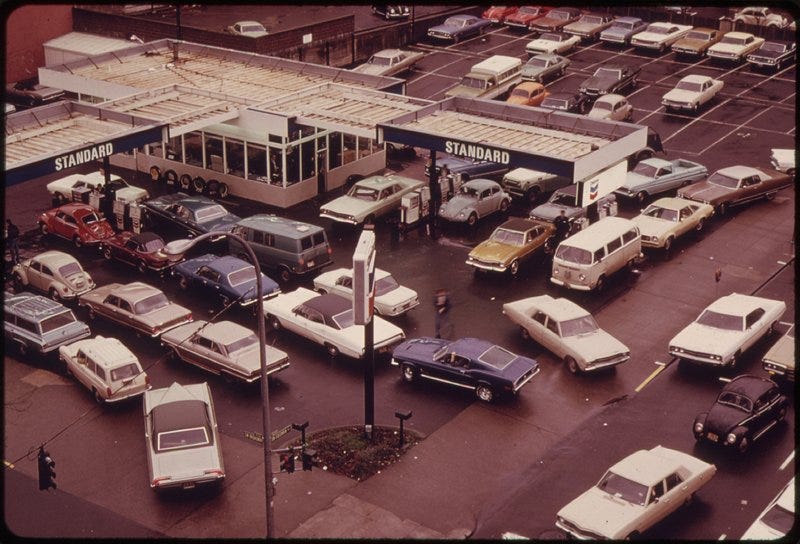
Suspending a gas tax isn’t an attempt to cap prices, but instead an effort to reduce a price input. But while this lowers one component of the retail price, it does nothing to reduce the underlying scarcity. If the market-clearing price is higher than it was before the conflict with Iran—and it clearly is—then some of the tax reduction will be offset by higher pre-tax prices.
Recent state-level price changes provide evidence of this. The average cost of fuel varies across states for many reasons, including gas taxes, environmental regulations, transportation costs, labor and operating costs, and market competition. During a supply shock, we would expect to see relative price differences decline, with lower-price states experiencing larger percentage increases in price at the pump than states that already had high prices. Market forces drive prices everywhere toward a new equilibrium, regardless of their starting point. Differences will remain, but we’d expect them to be somewhat smaller.
And they are. Using AAA’s daily average gas price data for February 6th (pre-supply shock) and March 16th, I compared initial gas prices with the percentage increase in prices post-supply shock. The effect is robust and in line with expectations.
To get technical for a moment, the coefficient is -0.074, meaning that for every $1 that a state’s gasoline price was above the national average on February 6th, the post-shock price increase was 7.4 percentage points smaller. States below the national average experienced larger percentage increases.
We can measure this convergence in other ways as well. Post-supply shock, relative price gaps shrank. The coefficient of variation fell from 15.3 to 13.2 percent, meaning that interstate price differences narrowed relative to the national price level. This is consistent with the regression results.
Throwing a gas tax holiday into the mix—whether federally or at the state level—won’t yield dollar-for-dollar savings, because marginal price changes are being driven by increased scarcity.
That doesn’t mean there wouldn’t be any savings. But during a supply disruption, the pass-through won’t be anywhere near complete. If the lower (or eliminated) tax induces additional consumption, the increased demand will undercut the intended relief, absorbing some of it into industry profits rather than passing it along to drivers. That’s not because oil producers, refiners, or service stations are being greedy; it’s just the intersection of supply and demand curves.
Prices are an allocation mechanism. During a supply shortage, efforts to hold down prices without addressing supply are unlikely to work as well as hoped. Motorists won’t get anywhere near as much relief as they expect, while transportation funds are deprived of revenue for road maintenance. It’s no surprise that gas tax holidays are proposed during periods of greater oil scarcity, but the problem that prompts the policy fix is also the reason the policy fix will underdeliver.
Obligatory Marketing Note
My new consultancy provides tax policy research, writing, and other services, both project-specific and on retainer (or in visiting fellow-style roles). If you are in the market for tax policy research or know someone who is, please let me know.
Please Share this Substack
If you find this Substack valuable, please do me a favor and share it with colleagues and others who may be interested. And if you haven’t yet subscribed (it’s free), please consider doing so!